
 Μake us preferred on Google
Developments surrounding the Greece-Cyprus electricity cable, known as the Great Sea Interconnector (GSI), are accelerating, while signals from the geopolitical front between Athens and Ankara appear positive for the time being.
Just days after Libya’s parliament ratified the Turkey-Libya maritime memorandum, developments involving another cable project in the Mediterranean are offering encouraging signs ahead of planned surveys by the ABEILLE MARENGO to determine the subsea route of the Greece-Cyprus interconnector.
EMC Survey Vessel Operating Within Turkey-Libya Claimed Area
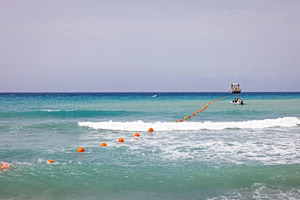
More specifically, the specialized survey vessel KOBI REUGG is operating without incident in waters southeast of Crete as part of work to lay the East Med Corridor (EMC) fiber-optic cable.
The project involves laying a data cable linking Asia and Europe along a route beginning in Singapore, passing through Saudi Arabia, Israel and Cyprus, and ending in Greece.
Athens and Ankara have issued competing NAVTEX maritime notices concerning the KOBI REUGG. During the morning hours, the vessel was operating within the maritime area delimited by Turkey and Libya under their memorandum, without prompting any reaction so far.
A Positive Sign for the Greece-Cyprus Cable
According to diplomatic sources, developments involving the EMC are also sending encouraging signals ahead of the marine surveys that the French vessel ABEILLE MARENGO is expected to conduct for the Greece-Cyprus cable.
The ABEILLE MARENGO departed Naples Friday, October 23, and is sailing toward Heraklion, Crete, where it is expected to arrive on October 27.
According to available information, a NAVTEX maritime notice is also expected to be issued in the coming days for the bathymetric surveys requested by Nexans, the French company constructing the cable.
The ABEILLE MARENGO is expected to begin its survey work southeast of the Greek island of Karpathos and continue as far as the 12-nautical-mile limit off Cyprus.
Sources expressed cautious optimism that work on the GSI will be carried out without triggering geopolitical tensions.
French Initiative
The Greece-Cyprus cable project gained greater geopolitical weight and further confirmed its economic viability when a 66% stake was acquired in the Great Sea Interconnector venture, which until the summer had been wholly owned by Greece’s Independent Power Transmission Operator (ADMIE).
The Greece-Cyprus cable has been designated a European Project of Common Interest and has received €680 million in funding from the European Commission. A financing request for the GSI has also been submitted to the European Investment Bank.
The electricity interconnection between the three countries will span 1,208 kilometers (751 miles) through subsea and onshore cables, of which 898 kilometers will cover the Crete-Cyprus section.
The interconnector will have a transmission capacity of 1,000 megawatts (MW), operate at a voltage of 500 kilovolts (kV), and reach a maximum cable-laying depth of 3,000 meters (9,843 feet).
The project’s estimated budget stands at €1.9 billion.